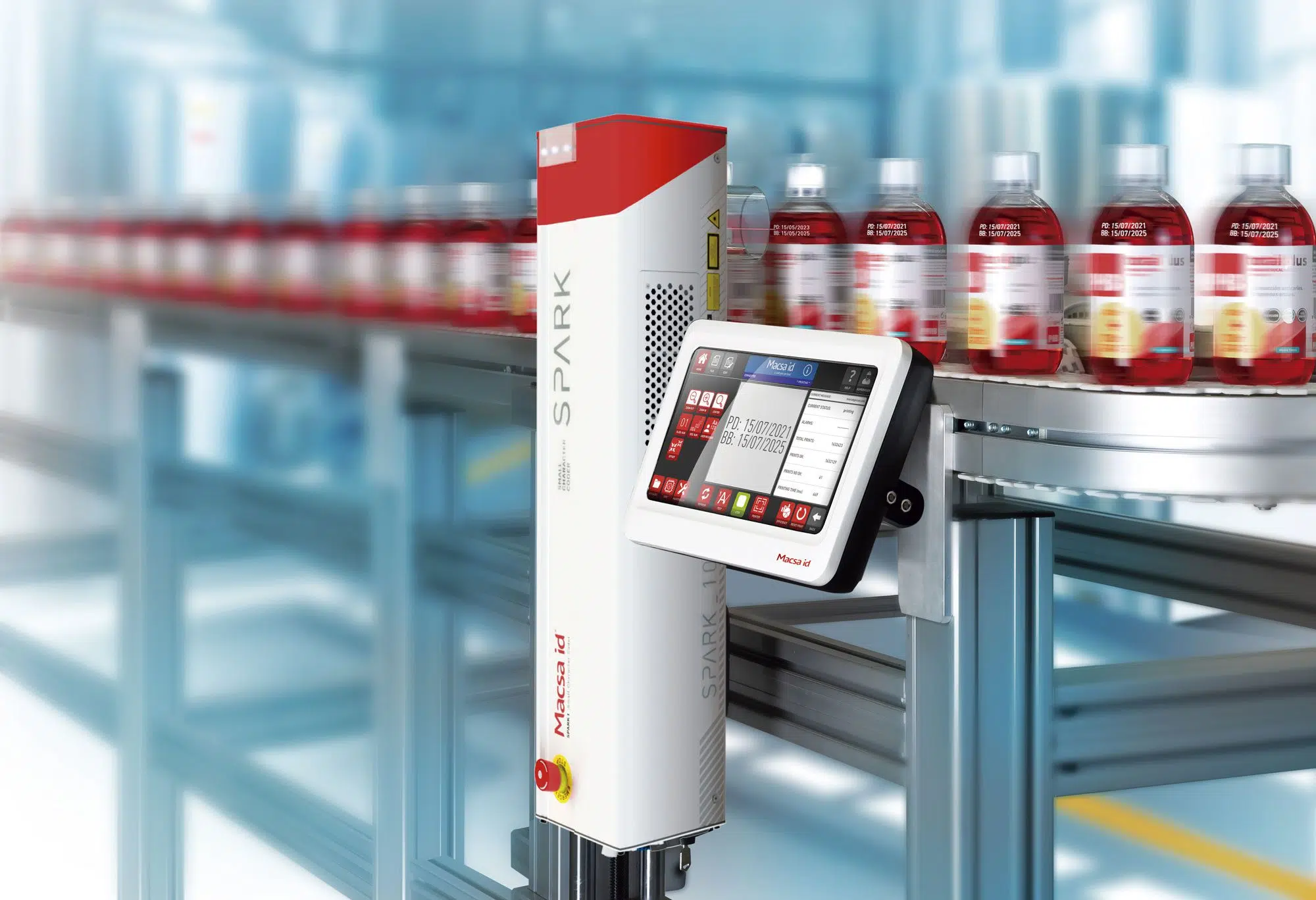
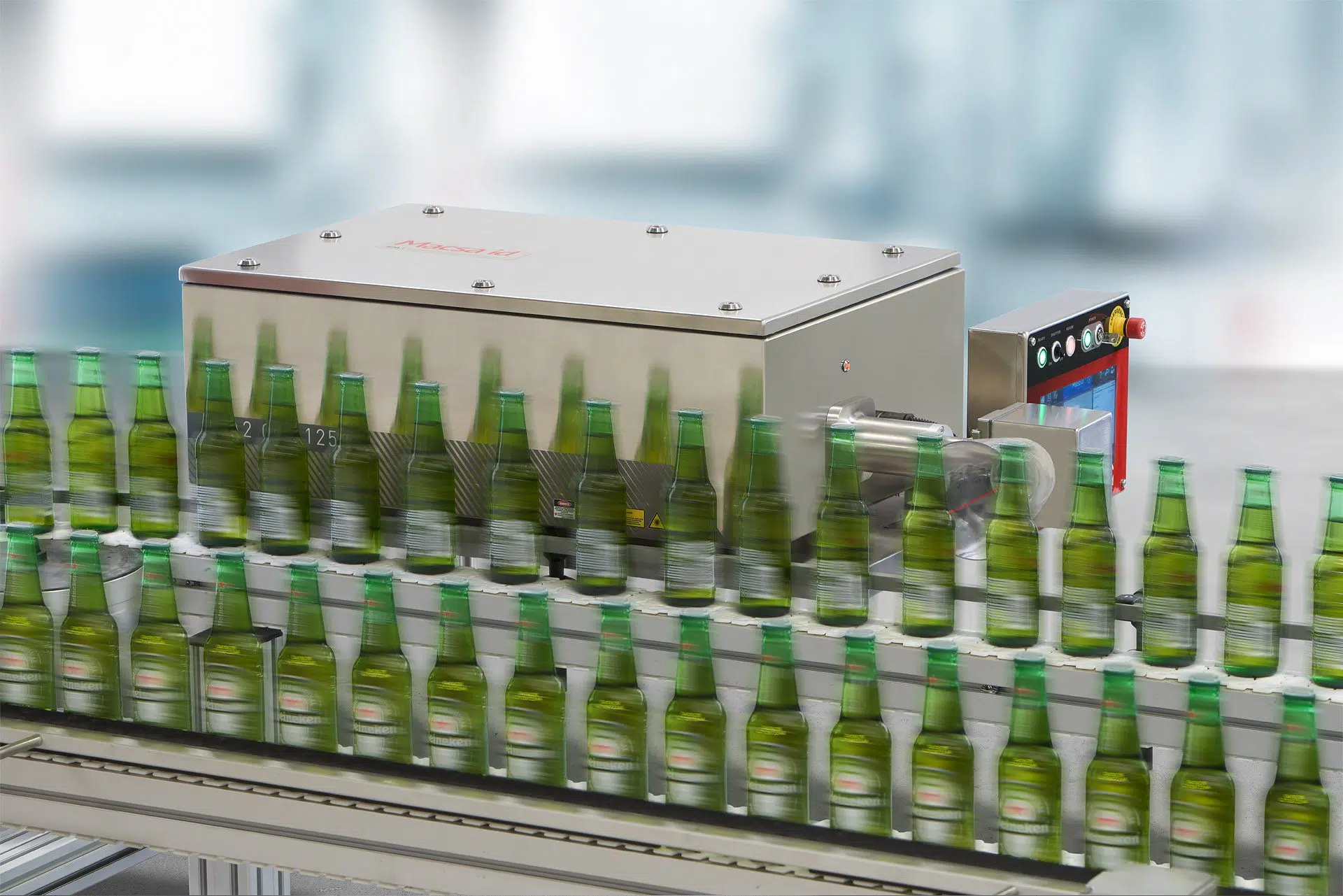
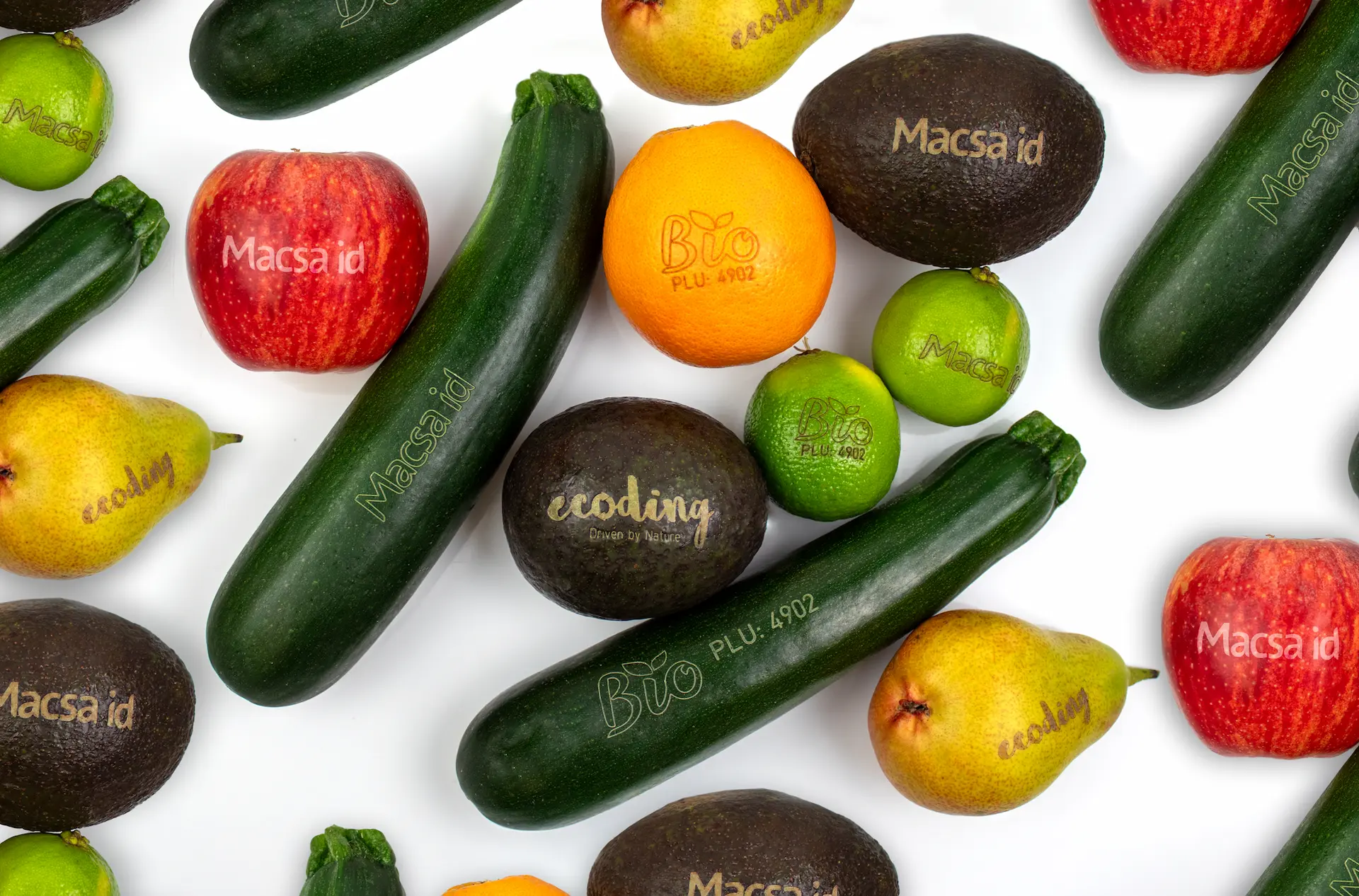
Food laser marking allows selected fruit, vegetables, eggshells and bakery products to be identified directly on their outer surface. Each application is assessed according to the food type, surface, required information and production conditions.
Food laser marking allows producers to add brand, traceability and product information directly onto selected food products. It can be used for fresh produce, eggshells and bakery products where the surface and application are suitable for laser marking.
At Macsa id, we assess each project according to the product, skin or surface condition, required mark, line speed and destination market. This helps define whether direct laser marking is technically suitable and how it can be integrated into the production process.
A controlled laser process creates contrast on the outermost surface of a suitable food product. It can be used to apply fixed or variable information without ink, adhesive labels or direct physical contact with the product.
Typical applications include:
Where direct marking is suitable, it can reduce the use of individual labels, adhesive materials and associated consumables. It does not automatically replace mandatory packaging or food-labelling information.
Marking information directly on the product can help distinguish varieties, communicate brand identity and support unit-level identification throughout distribution and retail.
Laser marking does not use inks, solvents or adhesive labels. The final system should include the appropriate safety, hygiene and extraction measures for the production environment.
CO₂ laser systems are frequently used for direct marking on suitable food surfaces. The laser creates a visible contrast by modifying a controlled area of the outer layer of the product.
The result depends on factors such as skin or shell type, colour, texture, product maturity, mark size, required contrast and line speed. For this reason, a setting that works on one fruit, vegetable or baked product may not be suitable for another.
Explore the SPARK CO₂ laser coder and our food coding and marking solutions.
Direct food laser marking can be considered for selected fruit and vegetables with an outer skin that can provide sufficient contrast. It may be used for branding, product identification and selected traceability information.
Eggshells and some bakery products can also be assessed for direct marking. The suitable process depends on the surface, the required information, production speed and applicable market requirements.
The technical ability to mark a product does not by itself confirm food-safety or regulatory compliance. Each producer must validate the application according to the food product, target market, retailer requirements and applicable labelling rules.
For example, eggs marketed in the European Union are subject to specific marketing standards for product and pack marking. See the European Commission guidance on eggs.

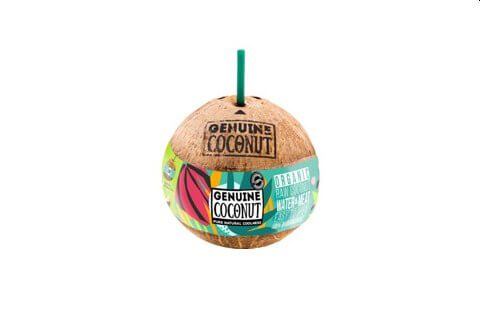
Before implementing a laser system, Macsa id can assess a real product sample to validate the appearance of the mark, product handling, production speed and integration requirements.
Send us your product and production details to assess whether direct food laser marking is suitable for your application.