Aluminum laser marking enables manufacturers to identify components, housings, extrusions, nameplates and packaging components directly on the material. Typical applications include serial numbers, part references, batch data, logos and 2D traceability codes.
Macsa id selects the appropriate laser source, optics and parameters around the alloy, surface finish, required contrast, code content and cycle time. A production-ready solution should be validated on the actual component, especially when the part is anodized, painted, coated or has a curved or reflective surface.
Laser marking can support the identification of aluminum components throughout manufacturing, assembly, quality control, maintenance and after-sales operations.
Typical marking applications include:
Where code quality is critical, the code should be designed for its final reading environment and verified during production.
Laser marking is a non-contact process that applies information directly to the part without transferring ink or ribbon during coding. It can reduce consumable handling and help manufacturers keep variable information linked to the component itself.
Depending on the process selected, laser marking can create surface contrast, remove a coating layer or produce a deeper engraved mark. The right result depends on the application rather than on the material name alone.
Fibre laser technology is suitable for many aluminum marking applications. It can be used to create references, serial numbers, logos and 2D codes on machined parts, housings, extrusions and identification plates.
The process can be adjusted to achieve different visual results, from surface marks to more pronounced engraving, depending on the required durability, contrast and cycle time.
MOPA laser technology provides additional pulse control for applications that require precise adjustment of contrast and appearance.
On selected anodized aluminum finishes, MOPA technology can help produce dark or high-contrast marks. However, the final result depends on the anodizing process, colour, coating thickness and surface condition. The required appearance should always be tested on the real production part.
When an application requires a more pronounced mark, laser engraving can remove material or a surface layer to create greater depth.
This can be useful for components exposed to handling, abrasion or subsequent manufacturing processes. The engraving depth, cycle time and acceptable surface effect must be defined before implementation.
Aluminum is not a single, uniform substrate. The marking result can vary according to:
For this reason, Macsa id recommends testing a representative component instead of a flat offcut whenever geometry or finishing is relevant.
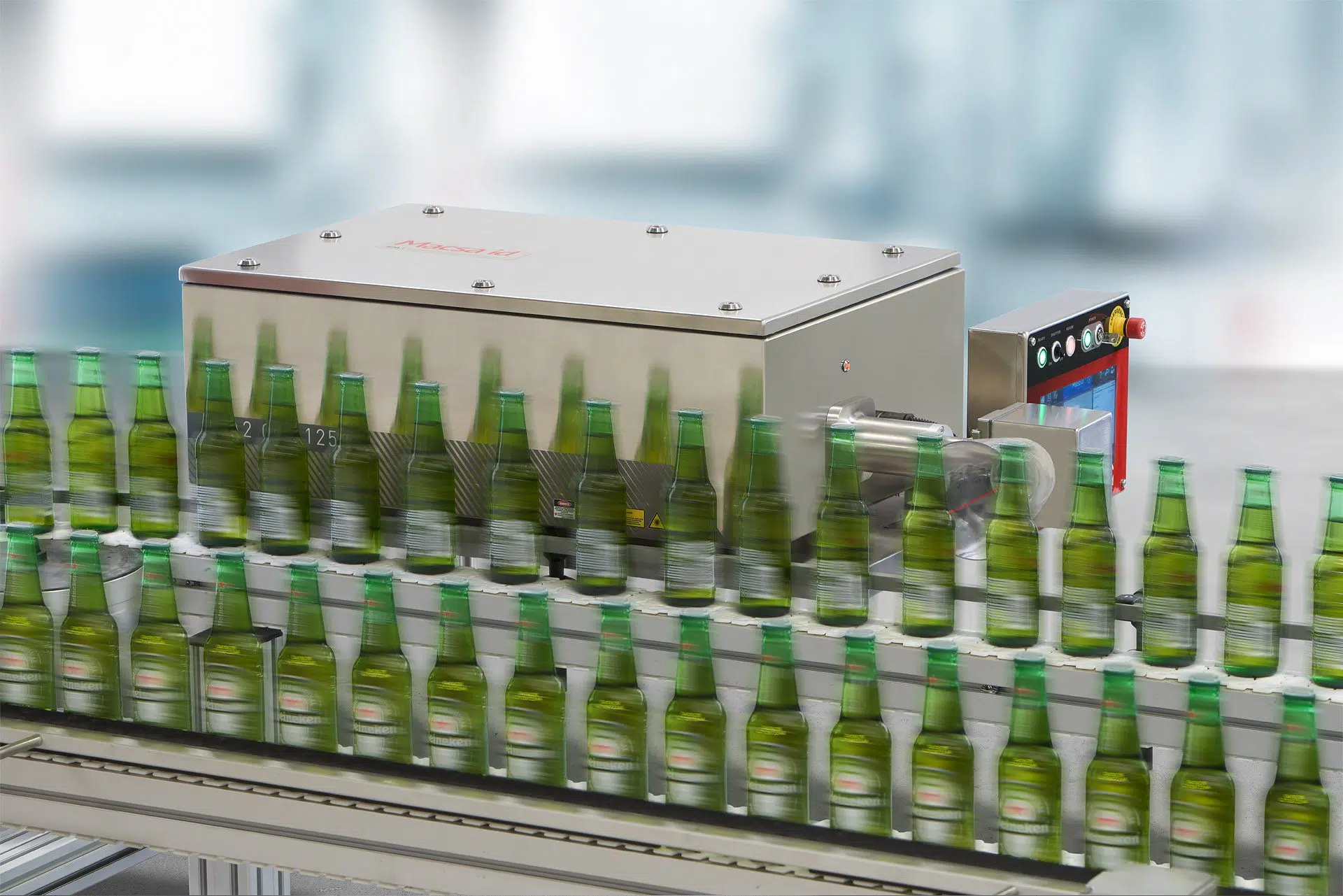
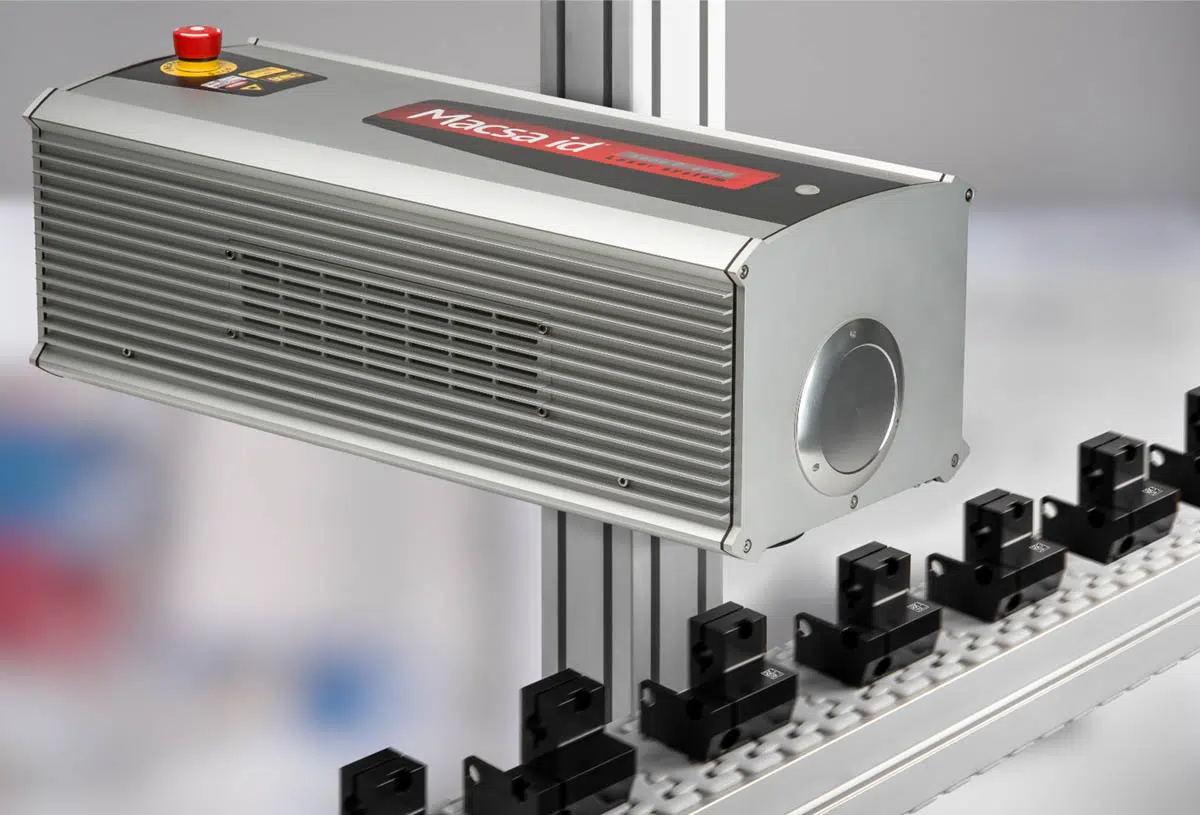
Macsa id laser systems can be integrated into automated production lines or configured in iLaserBox workstations for static, manual or semi-automatic applications.
The final configuration is defined around the part handling method, available space, production speed, safety requirements and data connection needs.


Send us a representative aluminum part together with the required code, finish information and expected production conditions. We will recommend the most suitable laser technology and configuration for your application.