Plastic laser marking enables manufacturers to identify engineering plastic parts with permanent serial numbers, references, logos and 2D codes, without inks, labels or physical contact with the component.
Plastic laser marking enables manufacturers to identify parts and components with permanent, legible information directly on the material. It is used for serial numbers, production references, batch data, logos, QR codes and DataMatrix codes in applications where traceability and reliable identification are essential.
At Macsa id, we develop laser marking solutions for engineering plastics and industrial components. Each system is selected according to the polymer, colour, additives, surface finish, code requirements and production conditions.
Laser marking creates information directly on the component without inks, labels or physical contact. Depending on the material and laser technology, the result may be a colour change, foaming, carbonisation, coating ablation or shallow engraving.
This makes laser marking suitable for:
The information is marked directly onto the part. There are no inks, cartridges, ribbons or labels that can wear, detach or require regular replacement.
Laser technology can create text, graphics and machine-readable 2D codes with the required definition and contrast for each application. Code size, position and readability should always be assessed according to the final use of the component.
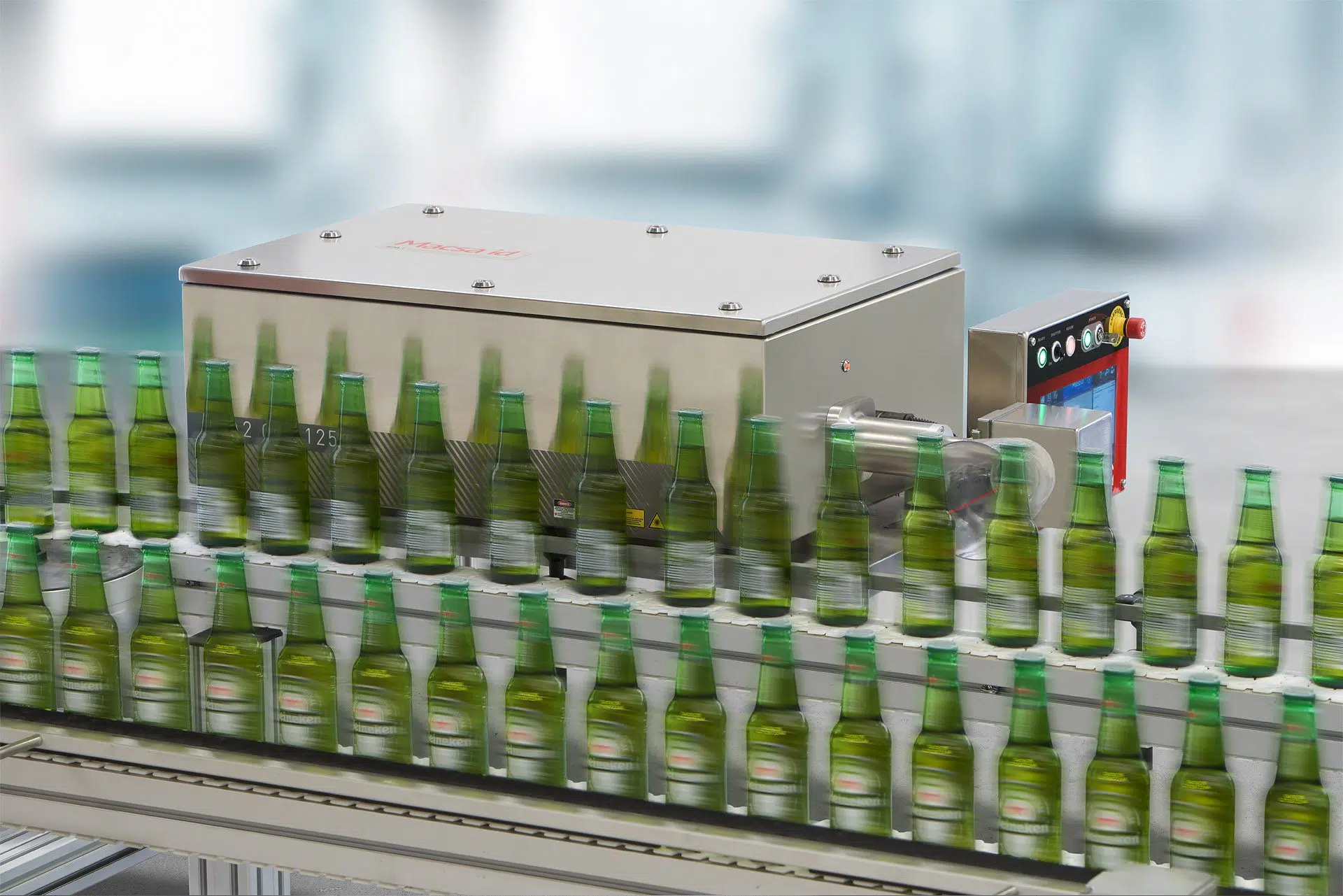
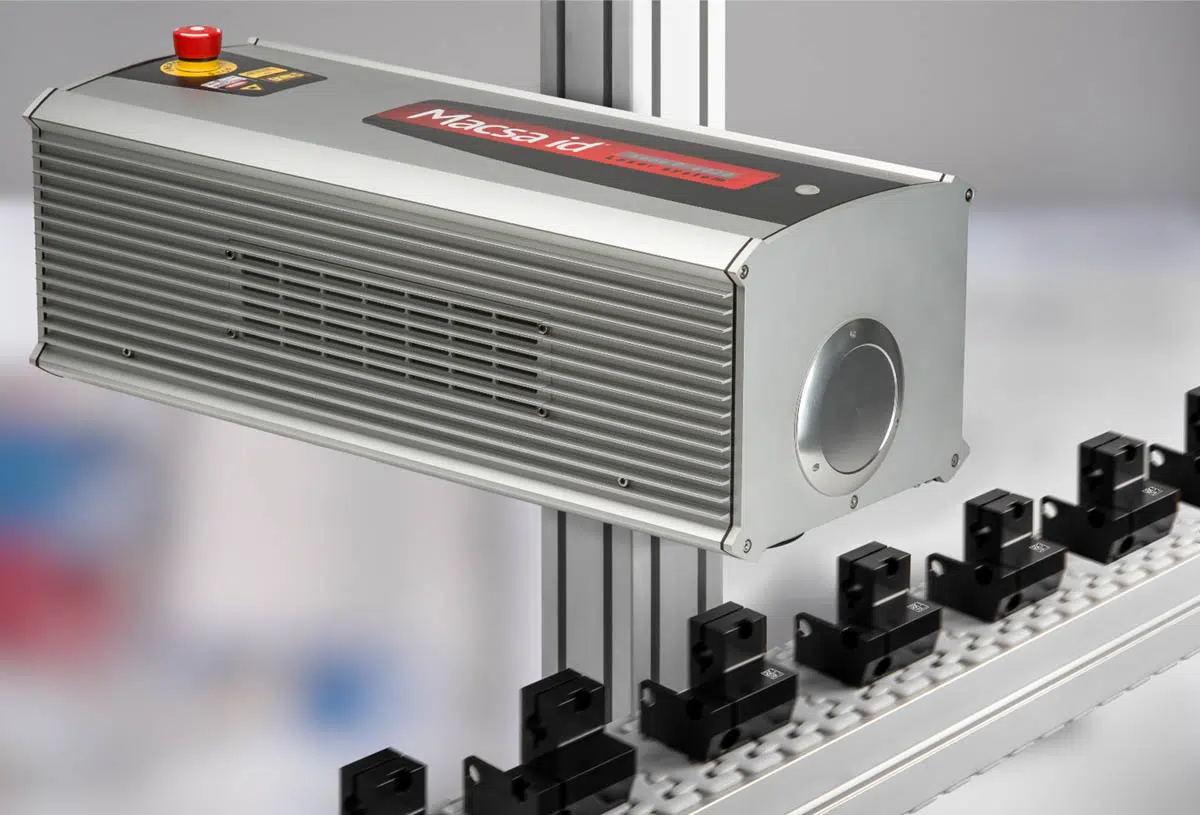
Macsa id laser systems can be integrated into automated production lines or configured in laser marking workstations for static parts, short runs and semi-automatic operations.
Laser marking can be applied to a wide range of engineering plastics, including:
The polymer alone does not determine the result. Colour, pigments, laser-sensitive additives, fillers, coatings, texture and part geometry can all affect contrast and marking quality.
For this reason, Macsa id performs marking tests on the actual component before defining the laser source, optics and process parameters.
Fibre laser technology, such as the SPA2 PULSED Fibre Laser, can be suitable for selected engineering plastics that require durable references, serial numbers, text, logos and 2D codes.
It is commonly considered for industrial components in sectors such as automotive, electronics and general manufacturing, where permanent identification and repeatable cycle times are required.
Green, UV and DPSS technologies are suitable for applications requiring fine detail, precise contrast or reduced thermal impact on the surface, utilizing systems like the SPA2 D Green UV, D-5000 DUO UV Series, D-5000 DUO Series and NANO DPSS.
These wavelengths can be particularly valuable for delicate plastics, coated parts and applications where material preservation and code quality are critical.
Plastic laser marking is used in a wide range of industrial applications:
For applications using GS1-compatible 2D codes, refer to the GS1 barcode standards.
Not every plastic reacts in the same way to laser energy. The best marking result depends on the material, colour, additives, surface finish, required code quality and production cycle time.
Macsa id evaluates the actual part before recommending a laser solution. This helps validate contrast, code readability, surface alteration and integration requirements before implementation on the production line.


Send us a sample of your plastic part and tell us what you need to mark. We will assess the material, contrast, code quality and cycle time to recommend the most suitable laser technology.